




5 Essential questions to ask before hiring a web design company
If you’re looking for a web design company, you’re not just looking for a vendor; you’re looking for a purpose-driven partner.


A great website is more than a digital storefront. It’s often the first impression people have of your brand and your mission. Done well, it can inspire donations, spark movements, and convert visitors into loyal supporters. Done poorly, it can quietly erode trust and opportunity. Choosing a web design partner should feel less like a transaction and more like building a partnership. The smartest organisations ask smarter questions, so here are five essential questions to ask before you hire a web design company.
1. What’s your design process… really?
Every web design company will tell you they have a process, but you don’t just want any process. You want one that’s clear, collaborative, and proven to deliver results. There are several tried and tested design processes that reputable agencies adapt to suit their work and clients. Ensure at the very least there is a clear:
- Discovery: Gather insights and understand the problem
- Definition: Identify priorities and set clear goals
- Delivery: Create, test (preferably with real users), and launch the solution
Research quoted by Kaley from the Nielsen Norman Group shows that usability issues identified late in development are up to 10 times more costly to fix than those caught during the UX stage. By prioritising collaboration and user testing early, you can save time, money, and frustration while getting a website that truly serves your audience.
2. Do you care about users, or just design trends?
A website which is on brand, aesthetically good, but frustrates visitors is a broken website. The truth is, many agencies tilt too far one way. The creatives usually deliver something visually stunning but can sacrifice usability and performance. The designers obsess over UX flows but sometimes over-engineer at the front end. And the tech-first teams? Fast, secure and scalable, but not always the most inspiring to use. The sweet spot lies in finding a partner that balances all three: aesthetics, usability, and technical performance.
When interviewing a web design company, ask them how they test for user experience (UX). Do they conduct usability testing? Do they consider accessibility guidelines like WCAG 2.2? Do they design for your audience, not just what looks trendy?
Why it matters:
- 88% of online consumers are less likely to return to a site after a bad user experience (Forrester Research, 2019) Research, 2019).
- Accessibility isn’t optional. One in five people in the UK live with a disability, and websites that ignore accessibility risk alienating entire audiences.
- UX isn’t just about inclusion; it directly impacts SEO and conversion. Google’s ranking algorithms now factor in user experience metrics through Core Web Vitals
A good partner will balance bold design with user-first principles to create a website that is not only engaging but also intuitive, inclusive, and future-ready.
3. Can I see relevant case studies?
Every agency has a “portfolio,” but glossy screenshots aren’t enough. What you really want are case studies that reflect your sector, scale, and values, and can demonstrate a measured outcome.
Case studies tell you:
- Whether the agency has worked with organisations like yours
- How they measure results beyond aesthetics
- How they align with values such as sustainability, inclusion, or ethical data use
For example, if you’re a charity, you’ll want to see examples of recent work for similar size charities that closely match your mission. If you’re a commercial organisation in the sustainability sector, make sure the portfolio includes work that reaches a similar audience to yours. A strong portfolio shows that a company doesn’t just design websites, they design for impact, tailored to each organisation’s unique mission.
4. What happens after launch?
Here’s a reality many companies won’t tell you: the launch isn’t the end, it’s the beginning. Too often, organisations are left with a shiny new site and no idea how to manage or improve it. The result? Stagnation, security vulnerabilities, or expensive fixes later on.
A responsible web design company will consider you as one of the users of your site, and should offer:
- Training for your team to confidently manage content
- Support packages for updates, bug fixes, and hosting management
- Proactive optimisation reports that ensure your site keeps delivering results
- Security management so you’re never caught off guard
A great partner doesn’t just hand over the keys and disappear. They stay invested in your success, offering robust post-launch care, whether it’s safeguarding security, improving performance, or introducing new features.
5. What makes you different from every other agency?
This is the clincher. If a web design company can’t clearly articulate what makes them different, that’s your answer. When you find a company with a powerful difference, it speaks volumes. It’s a sign that they’re not chasing short-term trends but are committed to building websites that last, websites that honour the trust of your audience and elevate your mission.
Hiring a web design company isn’t just a procurement decision. It’s about finding a partner who understands your mission, respects your values, and builds with your users in mind.
By asking these five questions, you’ll be able to find a partner who not only builds beautiful websites but also helps build your impact.
Why visual identity on the web really matters
That moment when every tab starts to look the same, why visually defining yourself is as important as good UX and Interface layout

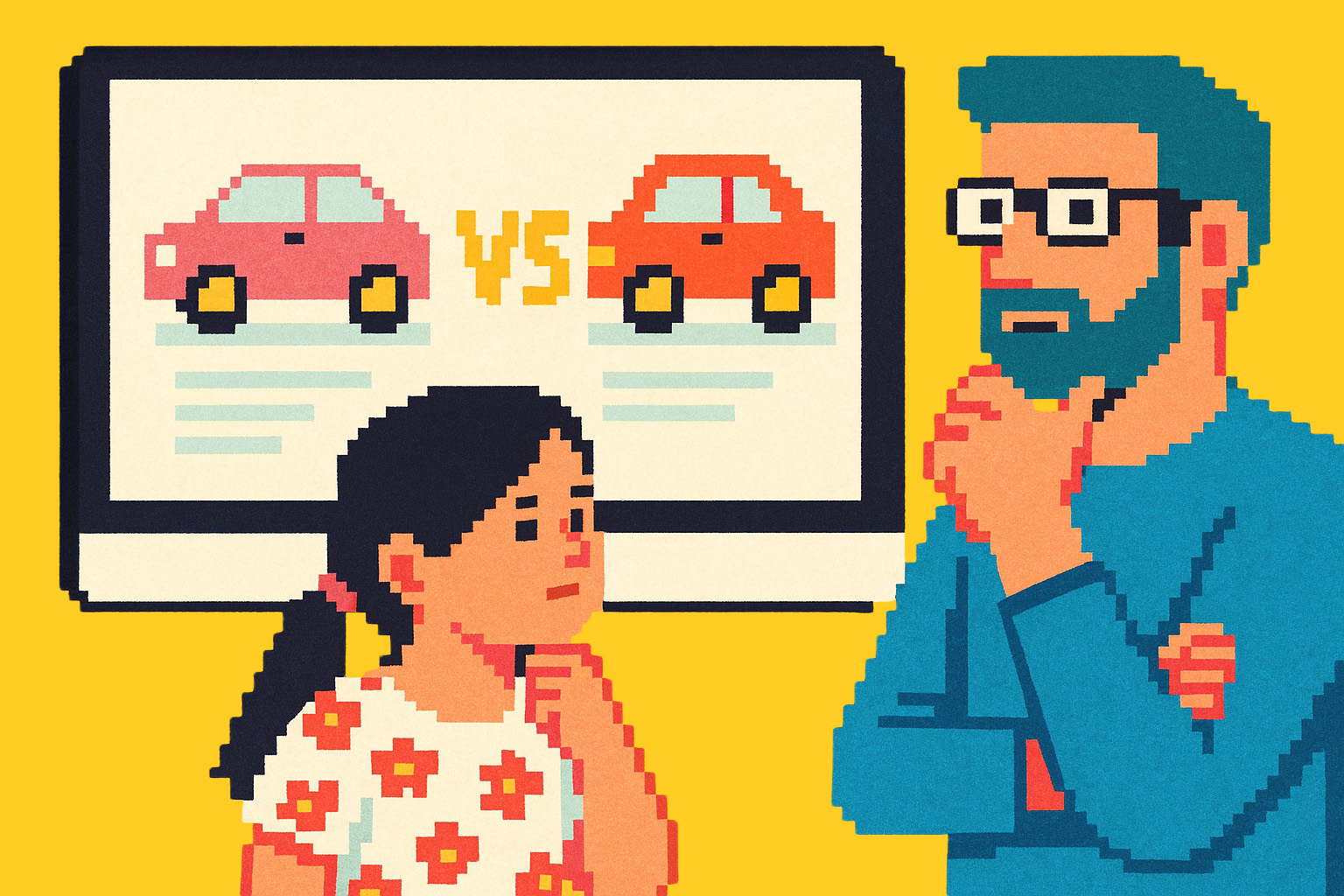
Drowning in a sea of sameness, why visual identity matters in a crowded pool of competitors
Not long ago, I was planning a family trip to Pompeii. I was comparing a few local tour guides online – looking at prices, itineraries, reviews. My daughter and I had several tabs open, flicking between sites to weigh up our options.
After a while, we found ourselves lost in a sea of sameness: we couldn’t tell them apart.
Each website had the same layout ↗. A large banner photo of Pompeii, a clean booking form, the usual navigation. All perfectly functional, all ticking the UX basics. But the problem? They all looked the same.
This is where good design fell short – not in usability, but in identity.
If consistency is King, identity is Emperor…
As designers, we’re taught to create familiar, consistent experiences. We expect certain things in certain places. That’s good. It helps us get things done without thinking too hard (cognitive overload).
But visual identity – the character, the vibe, the personality of a brand – that’s just as essential. And in this case, it was missing entirely.
A unique visual identity would have made it easier for us to remember who was who. But more than that, it would have communicated something valuable:
- Are you a luxury, bespoke tour operator, or a budget-friendly family guide?
- Is your tone academic and expert, or laid-back and fun?
You can say all that without a single word – if your brand has a clear visual voice.
So yes, be usable. Be accessible. Be what people expect.
But also: be you.
Photo created in Chat GPT
When your competitors are only a browser tab away, looking the same isn’t neutral. It’s a risk.
Kris Samyui-Adams